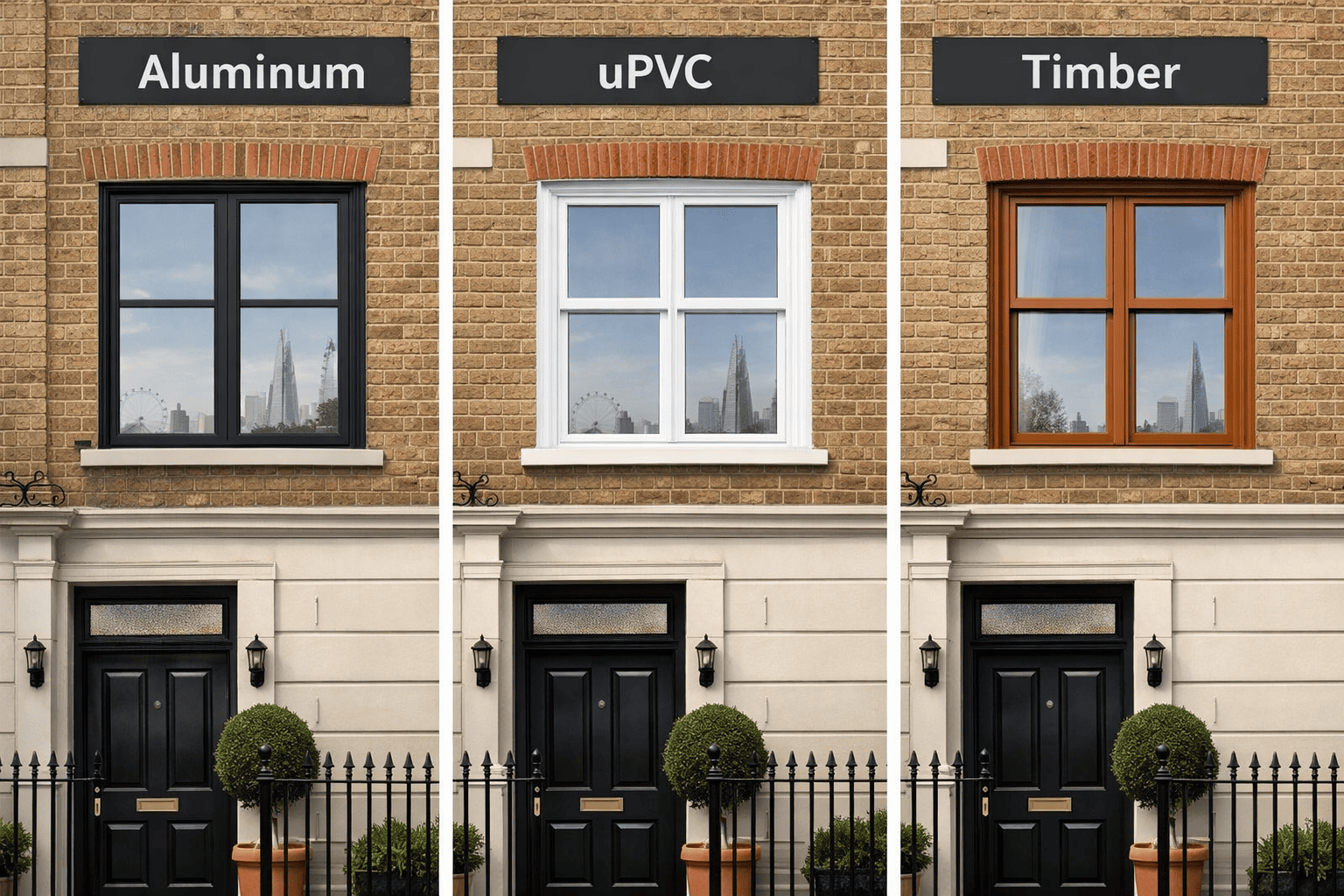

Choosing the right windows for your London property is not just a design decision — it is an investment that affects energy efficiency, property value, comfort, and long-term maintenance. With London’s diverse architectural styles, strict planning regulations, and unpredictable climate, homeowners and developers face a common question: Aluminum vs uPVC vs Timber — which window material is the best choice for a London property?
Should you choose aluminium, uPVC, or timber windows?
Each material has its advocates, and each comes with strengths and limitations. This article provides a clear, expert comparison of aluminium, uPVC, and timber windows — weighing cost, durability, aesthetics, sustainability, performance, and suitability for London homes — to help you make an informed decision.
While all three materials have their place, we’ll also explore why aluminium windows are increasingly becoming the preferred choice for modern London properties.
Understanding London’s Unique Window Requirements
Before comparing materials, it’s important to understand what makes London properties different:
Architectural diversity: From Georgian townhouses and Victorian terraces to contemporary apartments and commercial spaces.
Planning constraints: Conservation areas and listed buildings often require specific design considerations.
Climate: Frequent rain, pollution, temperature fluctuations, and limited sunlight demand durable, weather-resistant materials.
Urban lifestyle: Noise insulation, security, and low maintenance are increasingly important.
With these factors in mind, let’s explore each window material in detail.
Timber Windows: Traditional Beauty with Modern Challenges
The Appeal of Timber Windows
Timber has been used in British homes for centuries and remains popular, particularly in heritage properties and conservation areas.
Pros of Timber Windows
Authentic aesthetics: Ideal for period homes and listed buildings.
Natural material: Renewable and biodegradable when responsibly sourced.
Customisable: Can be shaped, painted, or stained to suit traditional styles.
Good thermal insulation: Wood naturally retains heat.
The Downsides of Timber Windows
Despite their charm, timber windows come with notable drawbacks:
High maintenance: Requires regular painting, sealing, and inspection.
Weather sensitivity: Prone to warping, swelling, and rot in damp climates like London.
Higher long-term costs: Maintenance and repairs add up over time.
Shorter lifespan: Without meticulous care, timber deteriorates faster than modern materials.
Best suited for:
Listed buildings, conservation areas, and homeowners prioritizing heritage authenticity over convenience.
uPVC Windows: Affordable and Functional, but Limited
Why uPVC Became Popular
uPVC windows gained popularity due to affordability and ease of installation, making them common across suburban London homes.
Pros of uPVC Windows
Cost-effective: One of the most affordable window options.
Low maintenance: No repainting required.
Decent insulation: Performs well thermally when new.
Quick installation: Widely available and mass-produced.
Limitations of uPVC
While practical, uPVC often falls short in design and longevity:
Bulkier frames: Reduces glass area and natural light.
Aesthetic limitations: Often unsuitable for premium or heritage properties.
Discolouration over time: Exposure to pollution and UV light can cause yellowing.
Environmental concerns: Difficult to recycle fully and derived from plastic.
Shorter lifespan: Typically needs replacing sooner than aluminium.
Best suited for:
Budget-conscious homeowners seeking a short- to medium-term solution.
Aluminium Windows: Modern, Durable, and Future-Proof
Why Aluminium Is Gaining Popularity in London
Aluminium windows have evolved significantly in recent years. Once criticised for poor insulation, modern aluminium systems now outperform many alternatives thanks to thermal breaks and advanced glazing.
Pros of Aluminium Windows
Exceptional durability: Resistant to rust, corrosion, and warping.
Slim profiles: Maximises glass area and natural light.
Modern aesthetics: Clean lines suit both contemporary and period renovations.
Low maintenance: No repainting, minimal upkeep.
Long lifespan: Can last 40+ years with minimal degradation.
High security: Naturally strong material.
Sustainability: 100% recyclable with a low environmental impact over time.
Weather resistance: Ideal for London’s climate and pollution levels.
Addressing the Myths About Aluminum
Older aluminium windows were known for poor thermal performance. Today, this is no longer the case:
Thermal break technology prevents heat transfer.
Triple glazing compatibility enhances insulation.
Energy ratings now match or exceed uPVC and timber systems.
Side-by-Side Comparison: Aluminium vs uPVC vs Timber
| Feature | Aluminium | uPVC | Timber |
|---|---|---|---|
| Lifespan | 40+ years | 20–30 years | 20–40 years (with maintenance) |
| Maintenance | Very low | Low | High |
| Frame Thickness | Slim | Thick | Medium |
| Aesthetics | Modern & versatile | Basic | Traditional |
| Energy Efficiency | Excellent (modern systems) | Good | Good |
| Sustainability | Very high (recyclable) | Low | Moderate |
| Cost (Initial) | Medium–High | Low | High |
| Cost (Long-Term) | Low | Medium | High |
| Security | Excellent | Good | Good |
Which Window Material Adds the Most Value in London?
Property Value and Buyer Appeal
London buyers increasingly prioritise:
Energy efficiency
Low maintenance
Natural light
Modern finishes
Aluminium windows consistently enhance resale appeal, particularly in:
New builds
Renovations
Apartments
High-end residential developments
Commercial properties
Timber may appeal to niche buyers, while uPVC often limits perceived property value in premium areas.
Planning Permission and Conservation Areas
Aluminium windows can now be powder-coated to replicate traditional styles, making them acceptable in many conservation contexts. Slim sightlines also mimic original steel or timber frames.
Always consult:
Local planning authorities
Heritage officers
Specialist installers
Aluminium often provides the best compromise between compliance and performance.
Sustainability and Environmental Impact
With increasing focus on sustainable building in London:
Aluminium is infinitely recyclable
Requires less replacement over time
Lower lifecycle carbon footprint than uPVC
Compatible with energy-efficient glazing standards
For eco-conscious homeowners, aluminium is the most future-proof option.
Cost Considerations: Short-Term vs Long-Term Thinking
While aluminium windows may cost more upfront than uPVC, they often prove more economical long-term due to:
Minimal maintenance
Longer lifespan
Better energy efficiency
Higher resale value
Timber, although beautiful, becomes the most expensive option over time.
Final Verdict: Which Windows Work Best for London Properties?
Choose Timber If:
You own a listed or heritage property
Authentic aesthetics are non-negotiable
You accept ongoing maintenance
Choose uPVC If:
Budget is your primary concern
Short-term solution is acceptable
Aesthetics are secondary
Choose Aluminium If:
You want durability, style, and performance
Low maintenance matters
You value natural light and slim frames
Sustainability is important
You’re investing for the long term
For most London properties, aluminium windows offer the best balance of design, performance, longevity, and value.
Conclusion: Aluminium Is the Smart Choice for Modern London Living
In a city as dynamic and demanding as London, your windows must do more than look good — they must perform, last, and add value.
While timber and uPVC have their place, modern aluminium windows stand out as the most versatile and future-ready solution, meeting the needs of contemporary homeowners without compromising on style or sustainability.
If you’re planning a renovation, extension, or new build, aluminium windows are not just an option — they are an investment in comfort, efficiency, and long-term peace of mind.